Silver
Engineering & Computing
Space-Filling Curves
The first curve discovered that could fill a square.
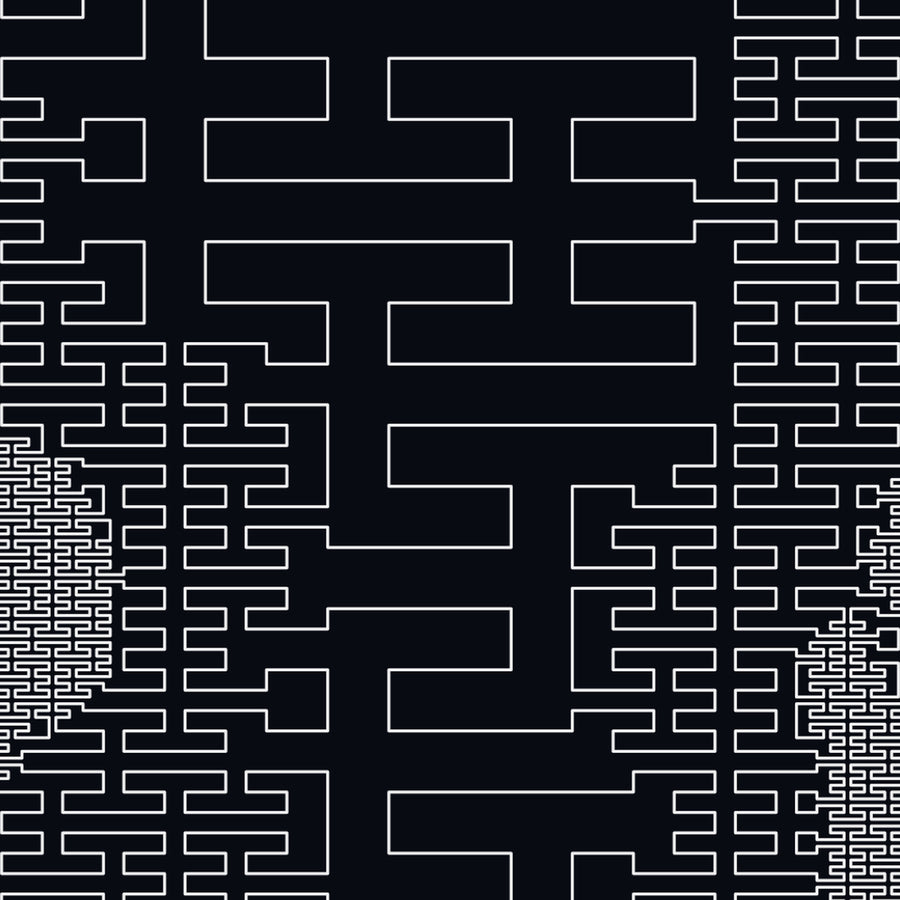
In 1890 Giuseppe Peano startled mathematicians with a curve that passes through every point of a square: a line that fills an area. His curve cut the square into nine smaller squares, snaking through them in an S, repeating the same process again and again, forever.
This print shows a curve built on these rules at several levels of recursion.
A year later David Hilbert found his own version with four squares instead of nine.
Computers use space-filling curves like this one to store maps, images and databases because this process keeps neighboring things side by side.
ForGrown from real mathematics
 Zenzicube
 Zenzicube